
T-grid ceiling systems are one of the most widely used suspension solutions in commercial and institutional buildings. From offices and hospitals to schools and retail spaces, T-grid systems provide a modular, cost-effective, and flexible framework that supports multiple ceiling panel materials.
Understanding how different ceiling panels interact with T-grid systems is essential for importers, distributors, and project contractors to ensure structural safety, installation efficiency, and long-term performance.
 1. T-Grid Systems with Mineral Fiber Ceiling Panels
Mineral fiber ceiling panels are the most common application for T-grid systems due to their standardized sizes and lightweight properties.
How T-grids support them:
Standard T24 and T15 grids match common panel dimensions
Even load distribution reduces panel sagging
Easy access for maintenance and replacement
Key considerations:
Grid thickness and coating quality affect long-term stability
Proper hanger wire spacing is critical for large panel formats
 Fiberglass panels are valued for superior acoustic performance and moisture resistance, especially in healthcare and educational buildings.
Support advantages:
Lightweight panels reduce stress on the grid structure
Compatible with exposed and semi-concealed T-grid designs
Maintains acoustic alignment and NRC performance
Installation tip:
Use corrosion-resistant grids in high-humidity environments to avoid deformation.
PVC gypsum panels are increasingly used in commercial interiors due to their clean appearance and moisture resistance.
 T-grid compatibility:
Works well with reinforced T-grids designed for slightly higher loads
Allows fast installation and uniform ceiling surfaces
Ideal for retail, corridors, and renovation projects
Important note:
Confirm panel edge design (square edge or tegular) before grid selection.
Metal ceiling panels require higher load capacity and precise alignment.
How T-grids perform:
Heavy-duty T-grids support aluminum or steel panels
Maintains flatness for visual consistency
Integrates easily with lighting and HVAC systems
Best practice:
Choose thicker T-grids and closer suspension spacing for metal panels.
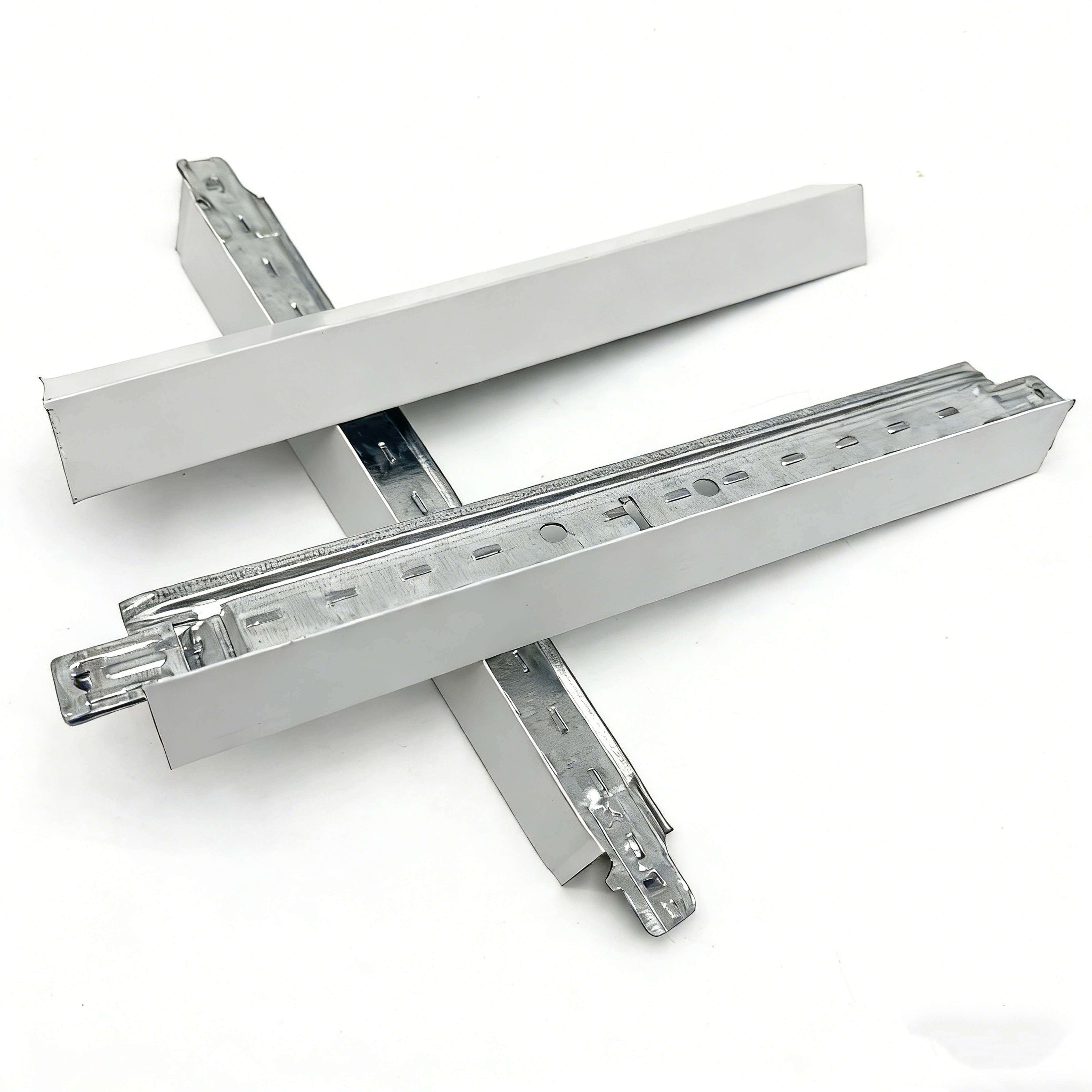 5. T-Grid Systems with Calcium Silicate or Fiber Cement Panels
These panels are heavier and used in areas requiring moisture resistance or durability.
Support requirements:
Reinforced main tees and cross tees
Reduced spacing between hangers
Strict adherence to load ratings
Importer insight:
Not all standard T-grids are suitable—always verify load capacity.
Regardless of panel type, T-grid systems offer:
Modular installation and easy panel replacement
Cost-effective logistics and standardized components
Compatibility with lighting, ventilation, and fire systems
Proven performance in global commercial projects
 Conclusion
T-grid systems remain the backbone of modern suspended ceilings because of their versatility and compatibility with a wide range of ceiling panel materials. For importers and distributors, selecting the right T-grid specification based on panel weight, environment, and application is critical to project success, safety compliance, and long-term performance.


