In the global trade of light steel framing (LSF), international procurement managers prioritize product longevity, structural stability, and core performance metrics are fundamentally rooted in the selection of raw materials—particularly the quality of the galvanized steel strip. As the foundational substrate for LSF production, the caliber of galvanized steel strips directly dictates the market competitiveness of the final product. Leading international steel mills employ rigorous selection criteria, underscoring a critical truth: premium LSF cannot exist without high-quality galvanized steel strips.
I. Core Material Selection Logic of International Steel Mills: Building Quality Foundations Through "Standards + Adaptability"
Global steel giants (e.g., POSCO Korea, JFE Japan, Thyssenkrupp Germany) supply galvanized steel strips to the LSF industry based on a triad of criteria: standard compliance, scenario adaptation, and process compatibility. This approach ensures raw materials perfectly align with high-end LSF production requirements.
1. Standard-First Compliance
International mills strictly adhere to globally recognized standards such as ASTM A653 (US) and EN 10346 (EU), which define critical parameters including:
- Base Material Composition: Preference for low-carbon cold-rolled steel strips (e.g., SPCC, Q235) with precise carbon control to prevent cracking or deformation during cold bending and stamping.
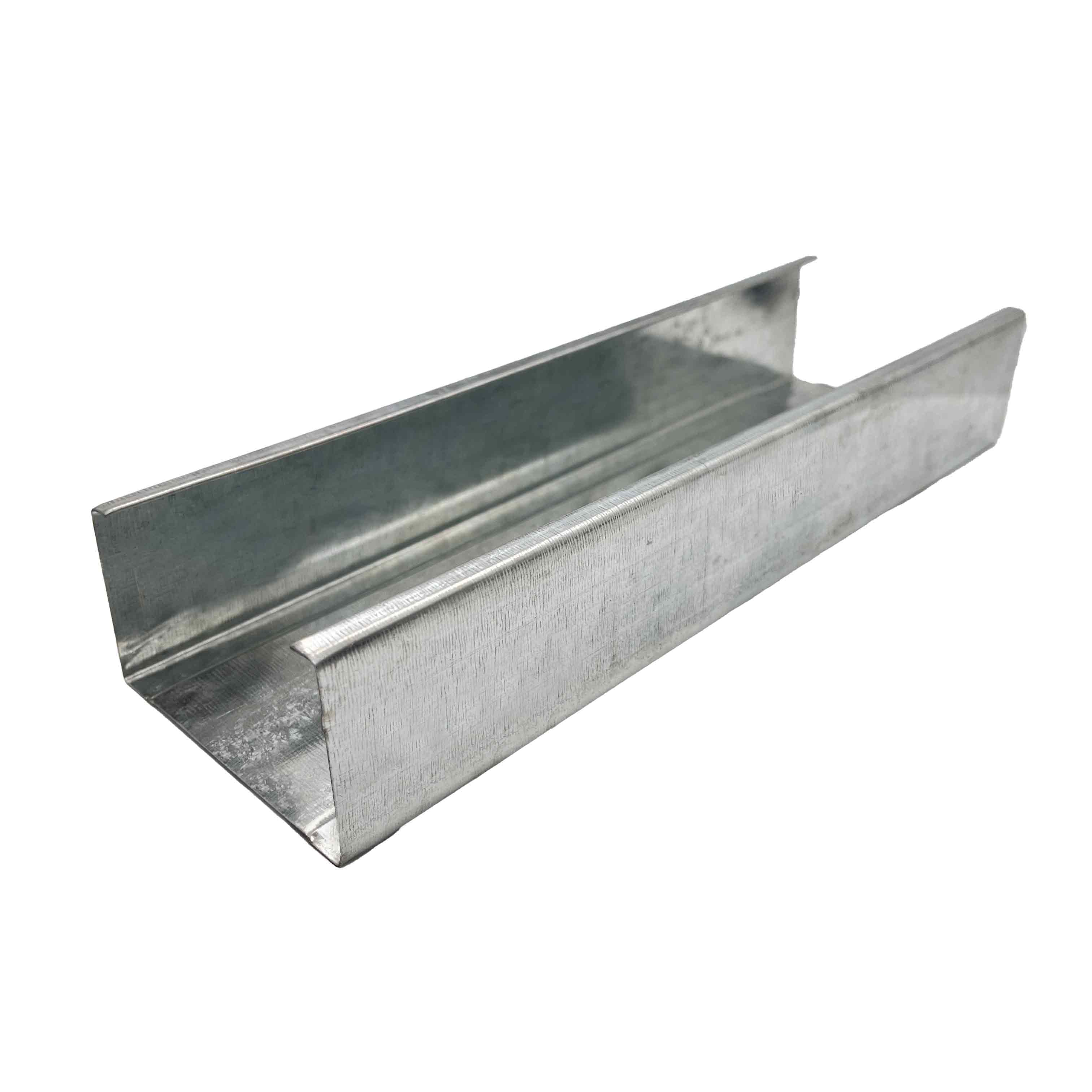
- Zinc Coating: Minimum dual-side zinc coating of 120 g/m² (up to 275 g/m² for premium products), exceeding basic requirements for conventional construction materials.
 2. Scenario-Specific Adaptation
Environmental diversity across markets demands tailored solutions:
- Humid/Coastal Zones: Hot-dip galvanization with annealing (700°C–850°C) creates dense alloy layers, achieving adhesion ≥35 MPa. Zinc layers resist peeling even in 180° bending tests.
- High-End Construction: Minimized zinc spangle (small zinc flowers) via forced cooling enhances surface smoothness for precision processing.
3. Process Compatibility
LSF manufacturing involves continuous cold rolling, forming, and cutting, requiring:
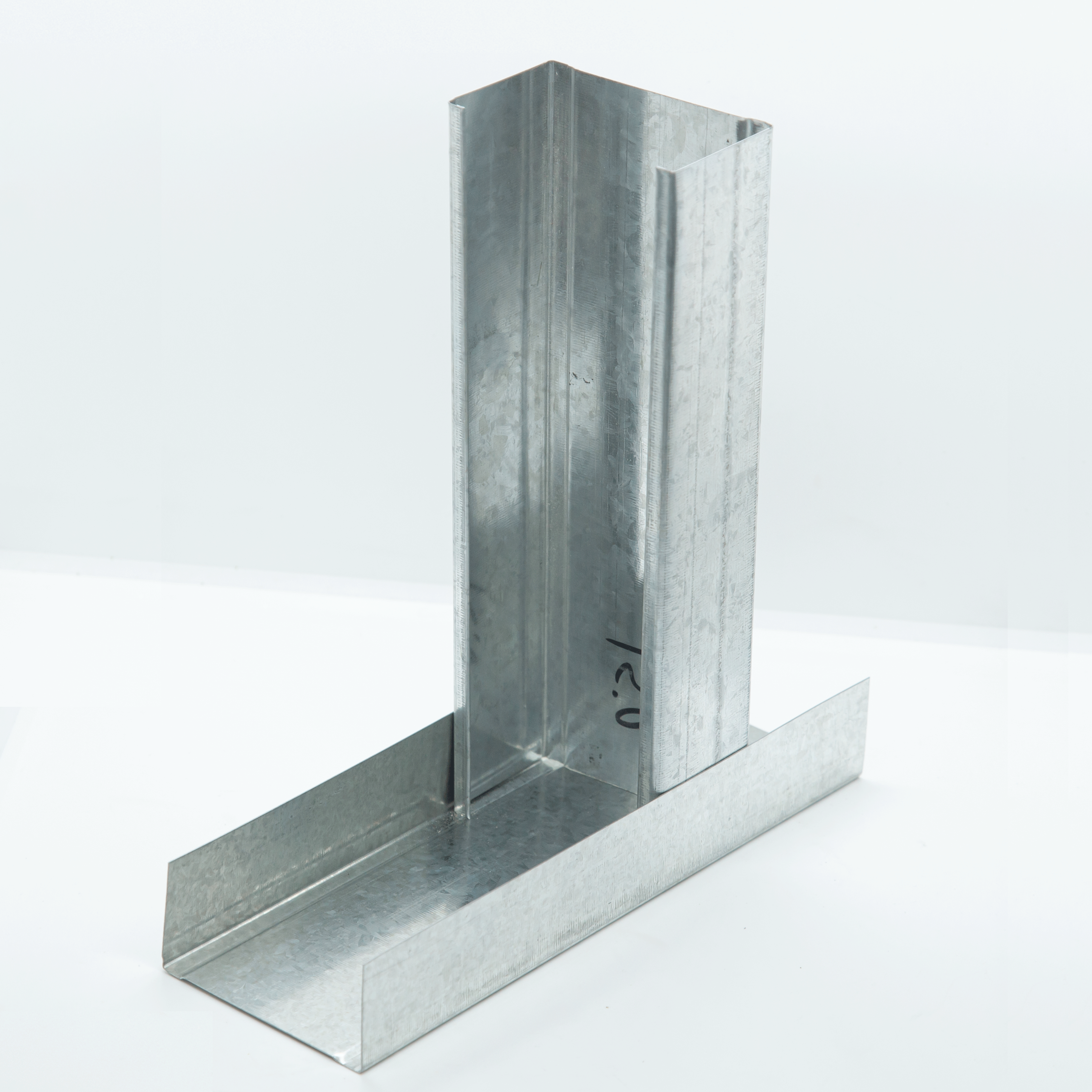
- Dimensional Accuracy: Thickness tolerance ≤ ±0.02 mm and straightness deviations ≤ 2 mm/m prevent post-forming warping.
- Mechanical Stability: Optimized rolling parameters eliminate slip lines during stamping, ensuring compliance with AISC (US) or EN 14195 (EU) standards.
High-quality galvanized steel strips are not merely advantageous—they are essential for LSF functionality, impacting structural safety, longevity, and installation efficiency.
1. Corrosion Resistance: The Lifeline
LSF systems in concealed spaces (e.g., ceilings, partitions) face catastrophic risks from rust. Premium strips leverage sacrificial anode protection:
- Performance Data: 600 g/m² zinc coatings withstand >2,000 hours of salt spray testing (equivalent to 30 years outdoors), critical for markets like the Middle East and Southeast Asia.
- Risk of Subpar Materials: Zinc layers <14 μm (below GB/T 11981) may corrode within 1–2 years in humid environments, escalating maintenance costs.
2. Structural Integrity: The Backbone
Load-bearing capacity hinges on base material strength:
- Superior Mechanics: Premium strips offer tensile strength ≥300 MPa (up to 980 MPa), ensuring uniform load distribution in seismic zones or high-rises.
- Low-Quality Risks: Impure or unevenly rolled substrates risk deflection failure during static load tests.
3. Precision Manufacturing: The Enabler
Installation accuracy depends on dimensional stability:
- Tolerance Control: Straightness ≤2 mm/m and length tolerance ≤±2 mm streamline production and installation.
- Substandard Consequences: Rough-rolled strips cause uneven joints, compromising drywall fixation.
4. Market Compliance: The Gateway
International certifications (e.g., ASTM C645, CE) mandate material quality:
- Certification Advantage: Premium strips facilitate seamless compliance with adhesion and mechanical tests.
- falls: Non-compliant materials trigger customs holds, project rejections, or legal disputes.
 III. The Hidden Costs of Substandard Steel Strips: A Triple Threat in Global Trade
Cost-driven suppliers risk partnerships through three failure modes:
- Premature Corrosion: Rust in humid/coastal projects leads to claims or contract termination.
- Structural Failures: Deformation or fracture under load incurs liability and reparations.
- Regulatory Non-Compliance: Customs delays or rejection at project handover inflates costs.
International mills mitigate these risks via stringent material selection, scenario-specific engineering, and full standard alignment. This reliability explains why global contractors prioritize LSF made from certified steel strips.
Key Procurement Insight: Beyond inspecting finished LSF, international buyers must trace material origins. Verify:
- Supplier partnerships with tier-1 steel mills
- Compliance with ASTM/EN standards
- Availability of mill test reports (MTRs)
Only by prioritizing raw material quality can procurement managers secure LSF that performs reliably in diverse global environments.

 2. Scenario-Specific Adaptation
 II. Four Critical Performance Pillars Enabled by Premium Galvanized Steel Strips
 III. The Hidden Costs of Substandard Steel Strips: A Triple Threat in Global Trade


