
China is one of the world’s largest producers and exporters of PVC gypsum boards, supplying markets across the Middle East, Africa, Latin America, Eastern Europe, and Southeast Asia. Competitive pricing and flexible customization make Chinese suppliers attractive—but successful importing requires more than comparing prices.
For importers, distributors, and project buyers, understanding what to check before placing an order is critical to avoiding quality disputes, project delays, and hidden costs.
This guide outlines the key inspection points every importer should review when sourcing PVC gypsum boards from China.
 1. Board Thickness and Tolerance Control
Thickness consistency directly affects installation quality and long-term performance.
Importers should verify:
Nominal thickness (e.g. 7mm, 8mm, 9mm, 12mm)
Actual thickness tolerance across the board
Uniformity between different production batches
Why it matters: Poor thickness control can cause uneven ceilings, installation difficulties, and visible surface defects.
Not all gypsum cores are the same. Core density and formulation significantly influence strength and fire performance.
Key points to check:
Core density and compressive strength
Presence of voids, cracks, or soft spots
Stability after cutting or edge processing
High-quality cores provide better screw-holding strength and reduce breakage during transport and installation.
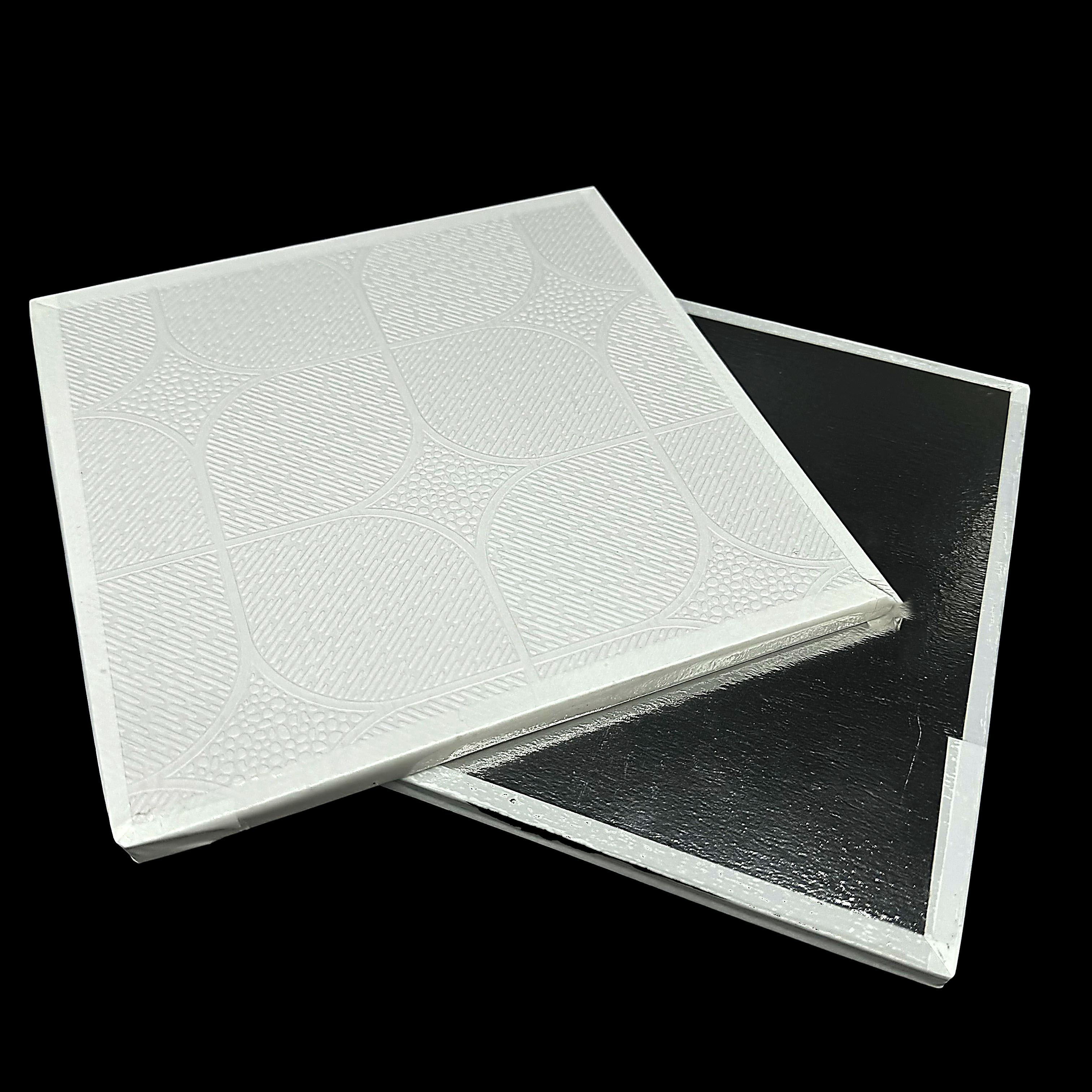 3. PVC Film Quality and Adhesion
The PVC surface layer is a defining feature of PVC gypsum boards, but also a common source of quality problems.
Importers should evaluate:
PVC film thickness and surface consistency
Adhesion strength between PVC and gypsum core
Resistance to peeling, bubbling, or delamination
Tip: Ask suppliers how PVC film is bonded (lamination process) and whether adhesion tests are performed.
PVC gypsum boards are often specified for humid areas such as bathrooms, kitchens, and corridors.
Important checks include:
Moisture absorption rate of the gypsum core
Resistance to warping or swelling under humidity
Performance after short-term water exposure
Not all PVC gypsum boards offer the same moisture resistance—especially low-cost versions.
 5. Fire Performance and Compliance
Fire safety is a major concern in commercial and public buildings.
Before purchasing, confirm:
Applicable fire rating (ASTM, EN, BS, or local standards)
Availability of third-party fire test reports
Consistency between tested samples and supplied products
Never rely on generic certificates that cannot be traced to the actual product.
Poor dimensional accuracy increases installation time and material waste.
Check for:
Length and width tolerances
Squareness of corners
Clean, undamaged edges
High-precision cutting reflects a manufacturer’s production control level.
 7. Surface Appearance and Finish
Surface quality directly affects the final visual result.
Inspect:
Color consistency of the PVC film
Surface flatness and gloss level
Absence of scratches, stains, or pinholes
For decorative ceilings, appearance issues often lead to rejection on-site.
Even good products can arrive damaged if packaging is inadequate.
Ensure:
Boards are stacked flat and protected at edges
Moisture-proof wrapping is used
Container loading prevents movement during transit
Proper packaging significantly reduces claims and losses.
 9. Factory Capability and Quality Control System
Supplier reliability is as important as product quality.
Importers should assess:
Production scale and automation level
In-house quality inspection procedures
Whether samples come from mass production
Factories with stable output and clear QC systems are better long-term partners.
Clear communication reduces risk in cross-border sourcing.
Evaluate:
Technical knowledge of the sales team
Speed and clarity of responses
Willingness to address quality issues contractually
A responsive supplier saves time and cost when problems arise.
 Conclusion: Smart Checking Reduces Import Risk
Buying PVC gypsum boards from China can be cost-effective and reliable—when importers focus on quality indicators, not just price.
By carefully checking specifications, core quality, PVC adhesion, certifications, and supplier capability, importers can protect project timelines, reduce disputes, and build stable supply chains.


