Adapting to North American Climates: Light Steel Stud Solutions for Partition Walls in Extreme Weather
Introduction: Core Challenges of Extreme Weather on Building Partition Walls in North America
North America's diverse climate presents formidable challenges for building construction, particularly for partition walls that define interior spaces. From the extreme cold of Canada and the northern United States to the hurricane-prone Gulf Coast and Eastern Seaboard, the scorching heat waves of the Southwest, and the high humidity of the Pacific Northwest and Southern coastal regions, each zone imposes unique stresses on building envelopes. Traditional materials like wood studs often fall short, leading to issues such as wall cracking, deformation, moisture damage, mold growth, structural instability, and reduced lifespan. This underscores the critical need for light steel stud partition wall systems engineered to withstand North America's multifaceted extreme weather conditions. This article explores the core advantages, technical solutions, and practical value of steel stud systems in ensuring resilient and durable partition walls across the continent.
 Major Extreme Climates in North America and Their Specific Demands on Partition Walls
2.1 Extreme Cold and Blizzard Conditions (Canada, Northern USA)
- Climate Impact: Low temperatures cause freeze-thaw cycles (frost heave), condensation within wall cavities, and significant snow load transfer, all threatening wall stability and integrity.
- Partition Wall Requirements: High freeze-thaw resistance, superior moisture management to prevent condensation, and exceptional structural rigidity to handle loads.
2.2 Hurricanes and High-Wind Events (Florida, Texas, Carolinas)
- Climate Impact: Powerful lateral wind detachment from structural frames, and catastrophic failure.
- Partition Wall Requirements: High tensile strength, robust wind load resistance, and secure, stable connections to the primary building structure.
2.3 Heat Waves and Thermal Fluctuations (Southwest Deserts, Midwest)
- Climate Impact: Significant expansion and contraction of materials due to temperature swings cause warping, buckling, and degradation of seals, compromising wall flatness and airtightness.
- Partition Wall Requirements: Excellent thermal stability, low coefficient of thermal expansion, and compatibility with high-performance insulation systems.
2.4 High, and Coastal Salt Spray (Pacific NW, Gulf Coast)
- Climate Impact: Persistent moisture leads to mold/mildew growth, material corrosion (especially metallic components), and long-term degradation of structural strength.
- Partition Wall Requirements: Effective moisture resistance, high corrosion resistance (including salt spray), and mold-inhibiting properties.
Core Advantages of Light Steel Studs for Partition Walls in Extreme Climates
3.1 Wind and Impact Resistance: Ensuring Structural Integrity During Storms
- Material Properties: Steel possesses inherent high tensile strength and rigidity, resisting deformation and fracture under high loads.
- Structural Design: Precision-engineered profiles and positive mechanical connections (e.g., track-to-stud clips, screw fastening) integrate the partition wall system with the primary structure, creating a unified load path for superior wind uplift resistance.
 3.2 Freeze-Thaw and Moisture Resistance: Eliminating Wall Hazards in Cold/Damp Environments
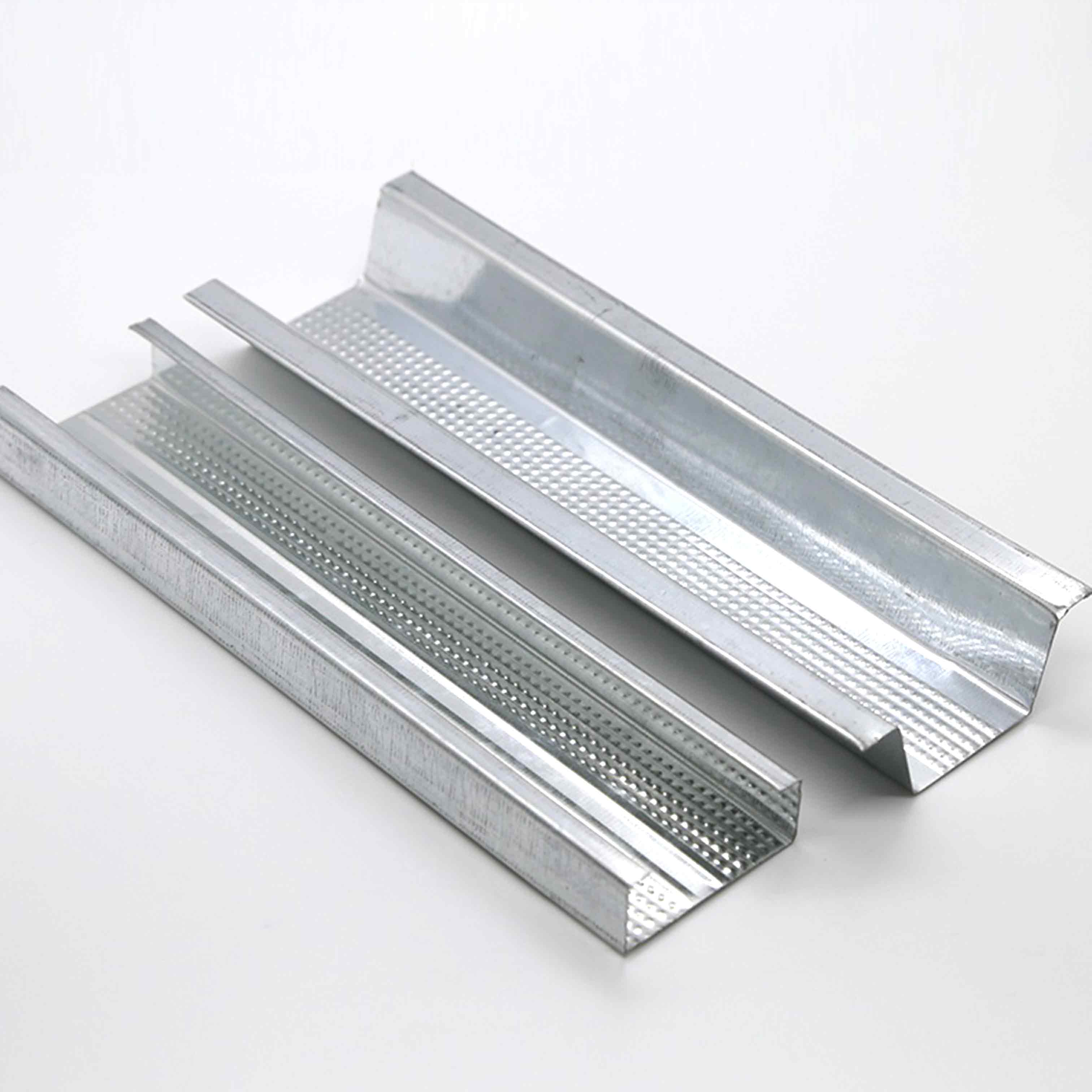
- Material Advantage: Steel is non-absorbent and non-combustible, eliminating rot and preventing freeze-thaw induced cracking common in wood. It does not provide a food source for mold.
- Protective Treatments: Standard galvanized coatings (e.g., G60, G90) and optional advanced coatings provide robust corrosion protection against condensation, humidity, and salt spray, ensuring long-term durability.
3.3 Superior Thermal Stability: Maintaining Wall Flatness Through Temperature Extremes
- Low Thermal Expansion: Steel exhibits a low coefficient of thermal expansion compared to many materials. It maintains dimensional stability, resisting softening in heat or embrittlement in extreme cold, minimizing warping and joint stress.
- Thermal Performance Compatibility: Steel studs readily integrate with high R-value insulation materials (batt, spray foam, rigid board) within the wall cavity, enhancing the overall thermal performance of the partition system.
3.4 Lightweight and Ease of Installation: Enhancing Efficiency in Challenging Conditions
- Lightweight Nature: Significantly lighter than concrete or masonry alternatives, reducing structural load and enabling safer, faster installation even during periods of challenging weather.
- Standardization and Precision: Factory-produced to exact tolerances, ensuring consistent quality. Simplified assembly with predictable dimensions minimizes installation errors and potential future problems related to poor fit or alignment.
Compliance and Certification for Light Steel Studs in the North American Market
Meeting stringent building codes is non-negotiable for partition wall systems. Key regulatory frameworks include: International Building Code (IBC)*
- International Residential Code (IRC)
- National Building Code of Canada (NBC)
Essential certifications demonstrating performance and compliance include:
- ICC-ES Evaluation Reports: Provide evidence of code compliance for building products.
- Miami-Dade County Notices of Acceptance (NOAs): Critical for products used in high-velocity hurricane zones (HVHZ), verifying wind resistance.
- UL Certifications: May cover fire resistance or other specific performance criteria.
Our light steel stud systems are rigorously tested and hold the necessary compliance documentation and certifications for major North American markets, ensuring your projects meet regulatory requirements seamlessly.
- Case Study 1: Residential Project, Florida Hurricane Zone: Post-hurricane inspections revealed that partition walls constructed with our specific wind-rated light steel stud system remained intact and securely fastened to the structure, while nearby structures using conventional wood framing suffered significant partition wall damage and detachment. Core Finding: Demonstrated superior wind load resistance and structural integration.
- Case Study 2: Commercial Building, Northern Canada: After several years in a harsh environment with deep freeze cycles and high interior humidity (e.g., swimming pool area), partition walls using our galvanized steel studs showed no signs of corrosion, mold growth, or deformation. Wood stud walls in comparable environments exhibited noticeable deterioration. Core Finding: Confirmed exceptional long-term stability, moisture resistance, and freeze-thaw performance.
Key Considerations for Selecting and Installing Light Steel Studs in North America
6.1 Selection Guide: Matching Specifications to Climate Zone
- Choose stud gauge (thickness) and spacing based on required load-bearing capacity (snow, wind).
- Select appropriate coating type and thickness (galvanizing level) for corrosion resistance based on humidity, rainfall, andcode requirements** (e.g., HVHZ wind ratings).
6.2 Critical Installation Practices for Extreme Climates
- Sealing: Ensure proper air sealing at top and bottom tracks, and around penetrations, to prevent moisture ingress and drafts.
- Fastening: Use manufacturer-recommended screws and fastening schedules for secure connections to the structure and between components.
- Insulation Integration: Detail the interface between insulation and studs to minimize thermal bridging and ensure continuous insulation coverage.
- Vapor Management: Follow appropriate vapor retarder/barrier placement strategies relative zone.
6.3 Maintenance for Longevity
- Light steel stud partitions require minimal maintenance. Primarily, ensure the integrity of interior wall finishes to prevent moisture from reaching the studs. Periodically inspect accessible areas (e.g., utility closets) for any signs of damage to finishes that could expose the studs to prolonged moisture.
 Conclusion: Light Steel Studs – The Optimal Choice for Partition Walls in North American Extreme Climates
Light steel stud systems offer a compelling solution for partition walls facing the rigors of North America's diverse and extreme weather patterns. Their superior strength, moisture resistance, thermal stability, and corrosion protection directly address the core challenges posed by blizzards, hurricanes, heat waves, and high humidity. Coupled with compliance with major building codes and critical certifications, they provide architects, builders, and developers with a reliable, durable, and cost-effective option. By choosing light steel studs, North American construction projects can significantly enhance partition wall quality, reduce weather-related risks and failures, and lower long-term maintenance costs. Our company offers tailored product solutions and expert support to meet the specific demands of your regional climate challenges. Contact us today to discuss how our certified light steel stud systems can fortify your next project.

 Major Extreme Climates in North America and Their Specific Demands on Partition Walls
 3.2 Freeze-Thaw and Moisture Resistance: Eliminating Wall Hazards in Cold/Damp Environments
 Case Studies: Light Steel Stud Performance in North American Extreme Climates
 Conclusion: Light Steel Studs – The Optimal Choice for Partition Walls in North American Extreme Climates


